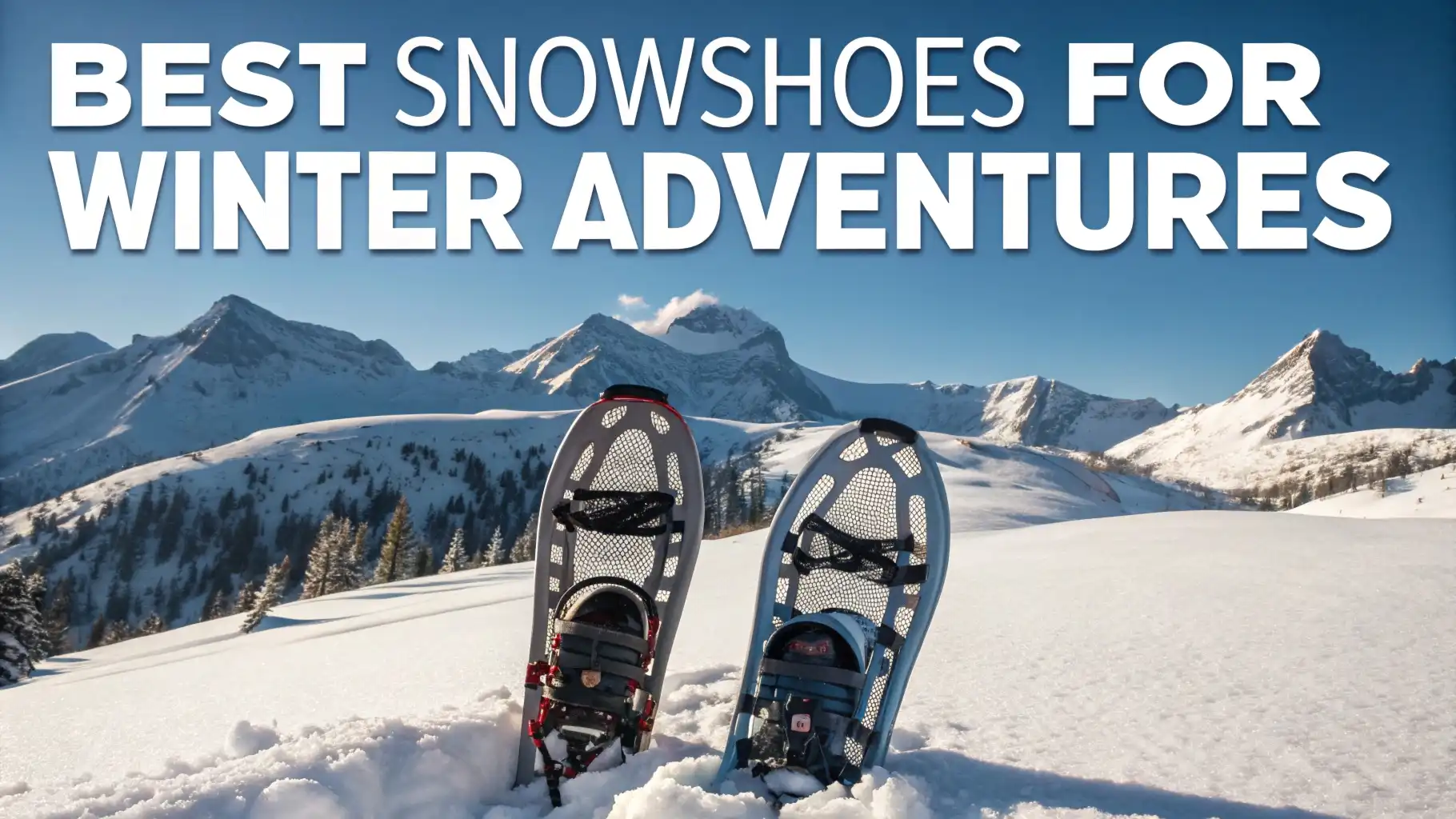
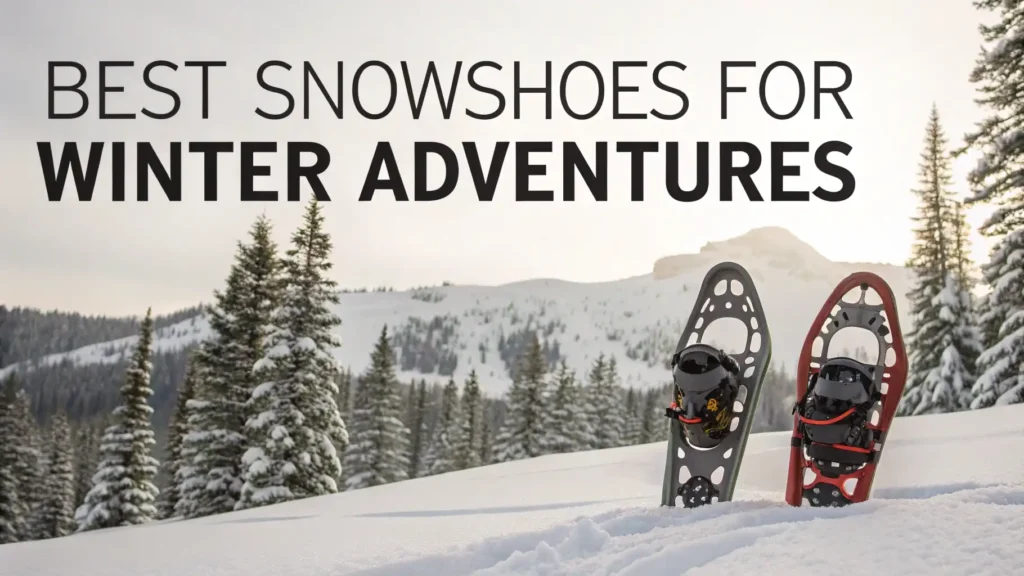
10 Best Snowshoes for Winter Adventures in 2026
Winter brings magical opportunities to explore snowy landscapes. But walking through deep snow can be exhausting without the right equipment.
Snowshoes transform your winter hiking experience by distributing your weight across a larger surface area.
This prevents you from sinking into the snow and allows you to trek through winter wonderlands with ease.
Key Takeaways:
- Size matters more than you think. Your snowshoe size depends on your total weight, including your body weight, clothing, boots, and backpack. Most snowshoes come in 22, 25, and 30 inch sizes. Heavier loads require larger snowshoes for proper flotation.
- Terrain determines the traction you need. Flat, packed trails require minimal crampons and simpler designs. Rolling terrain needs moderate traction with heel lifts. Mountain terrain demands aggressive crampons and sturdy frames that grip ice effectively.
- Binding systems affect comfort and security. Modern bindings use ratchet systems or boa closures that keep your boots firmly attached. Look for bindings that accommodate different boot sizes and are easy to adjust with gloves on.
- Aluminum frames offer the best durability. While composite materials reduce weight, aluminum frames provide superior strength for challenging terrain. They resist cracking in extreme cold and handle rocky conditions better.
- Heel lifts reduce fatigue on climbs. This simple feature raises your heel on steep inclines, reducing calf strain significantly. Most quality snowshoes include this essential feature for mountainous terrain.
MSR Lightning Ascent: Premium Performance for Serious Mountaineers

The MSR Lightning Ascent represents the gold standard for technical snowshoeing. These snowshoes feature a 360-degree traction frame that grips in all directions. The aggressive crampons bite into icy slopes with confidence. Your feet stay secure through the most challenging terrain.
The ultralight design weighs just 4.18 pounds per pair without sacrificing strength. The PosiLock AT binding system adjusts quickly and stays locked in place. You can fine-tune the fit even while wearing heavy winter gloves. The televator heel lift engages easily with your pole.
Pros:
Superior traction on steep, icy terrain
Extremely durable construction
Excellent binding system
Lightweight for technical snowshoes
Cons:
Higher price point than entry-level options
More snowshoe than needed for flat trails
Decking can be somewhat loud
MSR Evo Trail: Best Value for Beginners and Recreational Users

The MSR Evo Trail delivers outstanding value without complicated features. These snowshoes work beautifully for casual winter hikers and those new to snowshoeing. The simple design means less can go wrong in the field.
The one-size-fits-all approach eliminates confusion about sizing. The UniBody deck construction creates a durable platform. Steel traction rails and brake bars provide solid grip on moderate terrain. The simple strap binding system accommodates various boot sizes easily.
Pros:
Affordable entry price
Simple, reliable design
Good traction for moderate terrain
Compatible with optional tail extensions
Cons:
Flotation not ideal for deep powder
Bindings less sophisticated than premium models
Decking material can be noisy
Tubbs Flex VRT: Innovative Design for All-Terrain Versatility

Tubbs Flex VRT snowshoes feature the revolutionary Viper 2.0 crampon system. This aggressive traction setup handles variable terrain conditions exceptionally well. The unique design flexes naturally with your stride for comfortable all-day wear.
The ActiveLift heel lift adjusts on the fly without stopping to make changes. This convenience saves time and energy during climbs. The Boa binding system tightens with a simple dial turn. Your boots stay locked in position without pressure points.
Pros:
Excellent traction system
Comfortable flex technology
Easy-to-use Boa binding
Performs well across terrain types
Cons:
Moderately expensive
Slightly heavier than some competitors
Learning curve for Boa system
Retrospec Drifter: Budget-Friendly Choice for Casual Adventures

The Retrospec Drifter proves you don’t need to spend a fortune to enjoy snowshoeing. These affordable snowshoes perform admirably on packed trails and light backcountry use. The aluminum frame construction provides decent durability at this price point.
The double ratchet binding system secures quickly and adjusts for different boot sizes. Heel lifts help on moderate inclines. The included carry bag makes transportation and storage convenient. This bundle often includes trekking poles for added value.
Pros:
Extremely affordable
Lightweight aluminum frame
Includes carry bag
Good for beginners
Cons:
Limited traction for technical terrain
Bindings less robust than premium options
Not ideal for heavy loads
Atlas Helium Trail: Lightweight Champion for Fast-Paced Hiking

Atlas Helium Trail snowshoes prioritize minimal weight without compromising essential features. These snowshoes feel incredibly nimble on your feet. The lightweight construction reduces fatigue during long treks.
The Spring-Loaded Suspension system allows natural stride motion. Your feet flex and roll as they would during regular hiking. The Wrapp Trail binding fits securely with simple adjustments. Heel lifts deploy easily for uphill sections.
Pros:
Exceptionally lightweight
Natural stride feel
Comfortable binding system
Good flotation for the weight
Cons:
Less aggressive traction than mountaineering models
Price higher than basic options
Not ideal for very steep terrain
Crescent Moon Eva Ultralight: Eco-Friendly Innovation

Crescent Moon Eva snowshoes use biodegradable EVA foam construction. This environmentally conscious choice doesn’t sacrifice performance. The foam material flexes naturally and runs nearly silent on snow.
The dual-density rocker deck provides comfortable flotation. Ice spikes deliver traction on packed snow and icy patches. The simple binding system works reliably in cold conditions. This bundle includes trekking poles and a carrying bag.
Pros:
Environmentally friendly materials
Quiet operation
Comfortable flex
Includes accessories
Cons:
Less durable than aluminum frames
Limited traction on steep ice
Not suitable for heavy users
MSR Revo Explore: Rotating Deck Technology for Natural Movement

The MSR Revo Explore features patented rotating deck technology. This innovative design keeps the snowshoe flat on the ground regardless of your foot angle. You experience more natural movement and better traction.
The ExoTract deck provides excellent flotation in soft snow conditions. The Paragon binding system combines security with easy entry. Ergo televator heel lifts reduce calf strain on long climbs. These snowshoes handle diverse terrain confidently.
Pros:
Innovative rotating deck
Excellent binding system
Good flotation
Comfortable for long distances
Cons:
Higher price category
Heavier than some alternatives
More complex mechanism
Tubbs Flex ALP: Alpine Performance for Serious Terrain

Tubbs Flex ALP snowshoes target aggressive alpine environments. The Anaconda crampon system features two-piece construction. This design provides exceptional grip on steep, icy slopes. The carbon steel claws bite confidently into hard pack.
The ActiveFit 2.0 binding wraps your boot securely. The system distributes pressure evenly for all-day comfort. The DynamicFit boot bed adjusts to your specific boot shape. ActiveLift heel bars support steep ascents effectively.
Pros:
Superior traction for alpine use
Excellent binding comfort
Durable construction
Handles steep terrain well
Cons:
Premium pricing
Heavier than trail models
Overkill for flat terrain
TSL Symbioz Elite: French Engineering Excellence

TSL Symbioz Elite snowshoes represent European design philosophy. The Hyperflex frame adjusts to terrain automatically. This unique system provides grip when needed and releases smoothly on flat sections.
The Sound and Shock Absorbing System reduces impact and noise. Your joints appreciate the cushioning on long treks. The Memory Lock binding remembers your adjustment settings. The carbon inserts reduce overall weight significantly.
Pros:
Innovative flex system
Comfortable cushioning
Quiet operation
Lightweight carbon components
Cons:
Higher price point
Less common brand in US
Replacement parts harder to find
Atlas Range-MTN: Maximum Traction for Extreme Conditions

The Atlas Range-MTN delivers uncompromising performance in the harshest conditions. The All-Trac toe crampon features aggressive teeth. Heel cleats add security on descents. The Spring-Loaded Suspension absorbs shock effectively.
The Wrapp Stretch binding accommodates various boot sizes comfortably. The system stays secure without creating pressure points. Nytex decking resists tearing and provides reliable flotation. These snowshoes excel in technical mountain environments.
Pros:
Exceptional traction system
Comfortable binding
Durable construction
Excellent for mountaineering
Cons:
Premium price
Heavier build
More than casual users need
How to Choose the Right Snowshoe Size
Understanding proper sizing ensures you get maximum performance from your snowshoes. Start by calculating your total weight. Add your body weight, winter clothing, boots, and any backpack you typically carry. This total determines the flotation you need.
Most manufacturers provide weight range charts for each snowshoe size. A 150-pound person with a 15-pound pack needs snowshoes rated for 165 pounds. Remember that larger snowshoes provide better flotation in powder. Smaller sizes offer more maneuverability on packed trails.
Snow conditions matter significantly. Dry, fluffy powder requires more surface area than wet, dense snow. If you frequently trek through deep powder, size up. If you mostly walk packed trails, you can use smaller snowshoes within your weight range.
Understanding Binding Systems and Their Importance
Binding systems secure your boots to the snowshoes and dramatically affect comfort. Traditional strap bindings use multiple straps with buckles. These work reliably but take time to adjust. Modern ratchet systems tighten quickly with simple mechanisms.
Boa closure systems represent the latest innovation. A simple dial tightens steel cables evenly around your boot. You can make micro-adjustments easily, even with gloves on. The system releases instantly with a pop of the dial.
Look for bindings that accommodate your specific boot type. Hiking boots, winter boots, and mountaineering boots all have different shapes. Quality bindings adjust to fit various footwear sizes. Test the binding with your actual winter boots before purchasing.
Terrain Types and Traction Requirements
Different terrain demands specific traction features for safe, efficient travel. Flat, groomed trails need minimal traction. Simple toe crampons and brake bars provide adequate grip. You can move quickly without aggressive teeth catching on packed snow.
Rolling terrain with gentle hills requires moderate traction and heel lifts. Look for snowshoes with front crampons and side rails. Heel lifts reduce calf fatigue on extended climbs. This combination handles most recreational snowshoeing situations.
Mountain terrain demands serious traction systems. Aggressive crampons with multiple contact points grip icy slopes. Look for 360-degree traction frames that provide security from all angles. Heel crampons add confidence on steep descents.
Frequently Asked Questions
What size snowshoes do I need for my weight?
Your snowshoe size depends on your total loaded weight, not just body weight. Add your body weight plus clothing, boots, and any pack you carry. For 125 to 175 pounds, choose 22-inch snowshoes for packed snow or 25-inch for powder. For 175 to 225 pounds, select 25-inch snowshoes or add tails to 22-inch models. Over 225 pounds requires 25-inch snowshoes with tails or 30-inch models for adequate flotation.
Are expensive snowshoes worth the investment?
Premium snowshoes offer significant advantages for serious users. Better traction systems perform reliably on steep, icy terrain. Superior binding systems stay comfortable during all-day treks. Durable construction withstands years of hard use. For casual users on flat trails, mid-range options provide excellent value. Consider how often you’ll use them and the terrain you’ll tackle.
Can I use snowshoes for running?
Yes, specialized running snowshoes exist for winter trail running. Look for lightweight models with flexible designs. Running snowshoes feature minimal flotation since you move quickly over snow. The bindings must secure firmly without restricting natural foot flex. Standard hiking snowshoes work for jogging but feel cumbersome for serious running.
How do I maintain my snowshoes?
Rinse snowshoes with clean water after each use to remove salt and dirt. Check all rivets and connection points for tightness regularly. Store in a cool, dry place away from direct sunlight. Inspect bindings for wear before each season. Tighten any loose screws or bolts. Replace worn crampon points to maintain traction performance.
What’s the difference between men’s and women’s snowshoes?
Women’s snowshoes typically feature narrower frames that match average female stride width. This prevents the awkward bow-legged gait that oversized snowshoes cause. The binding placement accommodates smaller boot sizes. Many unisex models work perfectly for women, especially those with larger feet or wider stances.
Do I need trekking poles for snowshoeing?
Trekking poles significantly improve stability and reduce leg fatigue. They help you maintain balance on uneven terrain and steep slopes. Poles with snow baskets prevent sinking into soft snow. They allow you to test snow depth ahead and help with climbing. While not absolutely required, most snowshoers find poles invaluable.