
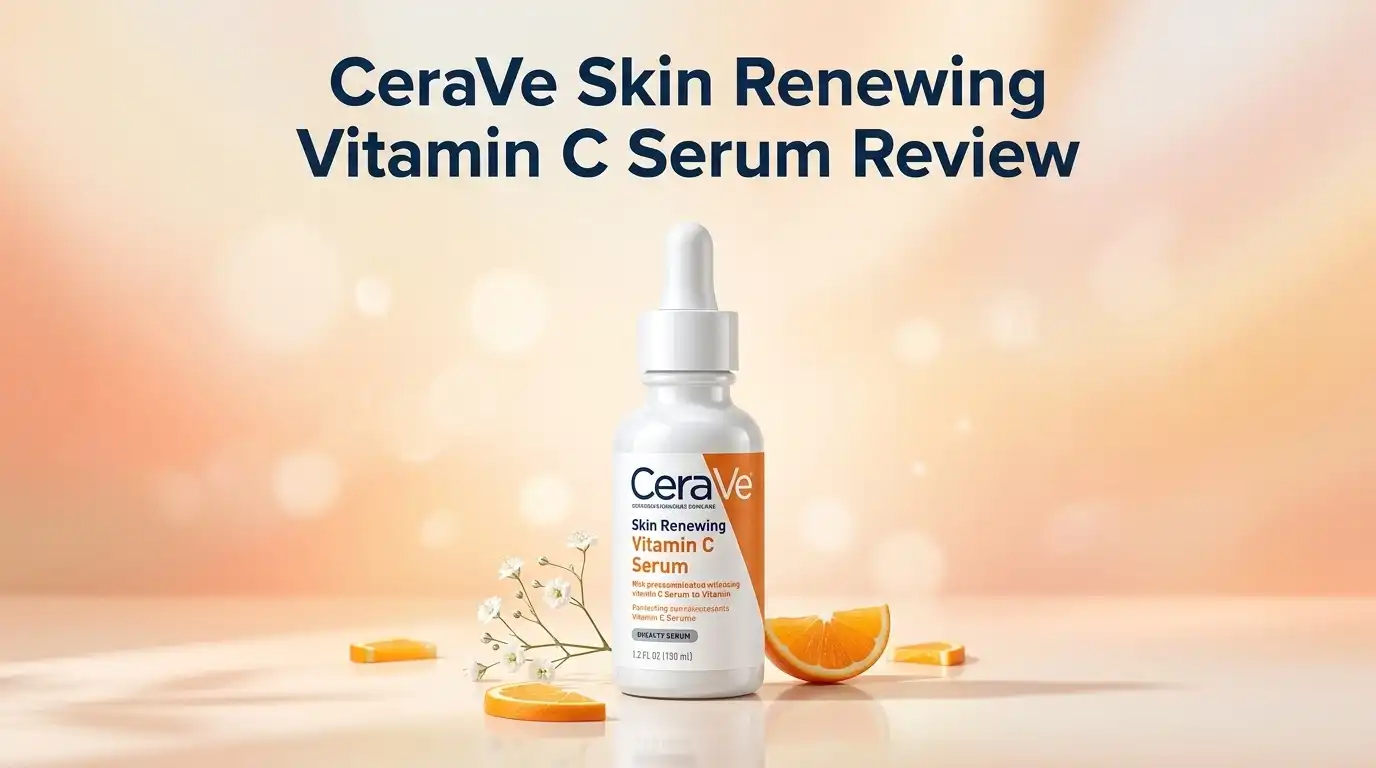
CeraVe Skin Renewing Vitamin C Serum Review 2026: Worth It?
Vitamin C serums promise glowing skin. Most of them cost a lot and sting even more. So when a drugstore brand sells a 10% pure vitamin C serum for under twenty dollars, people get curious fast.
I bought the CeraVe Skin Renewing Vitamin C Serum and used it every morning for eight weeks. I tracked my dark spots with photos. I noted every stingy morning and every good skin day. I also watched the bottle slowly change color, which tells its own story.
This review covers the texture, the smell, the real results, and the parts CeraVe does not advertise. I will also show you three solid alternatives if this one does not match your skin. No hype. Just what actually happened on my face.
In a Nutshell:
- The formula is genuinely good on paper. It packs 10% pure vitamin C, three ceramides, hyaluronic acid, and vitamin B5. That combination brightens skin while it supports the moisture barrier, which most budget vitamin C serums ignore completely.
- Results show up slowly, not overnight. My skin looked brighter and smoother at week four. Old acne marks faded by maybe 30% at week eight. Deep melasma patches barely moved. This serum evens out dullness far better than it erases stubborn pigment.
- The texture is the biggest surprise. It feels like a thin lotion, not a watery drop serum. It sinks in fast, leaves zero stickiness, and sits under sunscreen without pilling.
- It stings some people. The formula contains denatured alcohol and sits at a low pH. My cheeks tingled for the first week. Friends with sensitive skin reported burning and mild redness.
- The packaging is the real weak point. The pump bottle lets in light and air. My serum turned light orange around week six. Vitamin C hates air, and this bottle does not fight back hard enough.
- Best value for beginners. If you have never used vitamin C and want a gentle entry point with barrier support, this bottle earns its price.
CeraVe Skin Renewing Vitamin C Serum

- [ ANTIOXIDANT BENEFITS ] Antioxidant serum for face formulated with 10% t l-ascorbic acid, the purest form of vitamin C, to help brighten and even skin tone. Protective packaging helps prevent oxidation and maintain product performance.
- [ HYDRATING SERUM ] Facial serum formulated with Hyaluronic Acid to help improve skin tone, texture, and hydration for a healthy looking, radiant complexion.

Last update on 2026-06-23 / Affiliate links / Images from Amazon Product Advertising API Some of the links on this website are affiliate links, which means that at no additional cost to you, I earn a commission if you click through and make a purchase. I only recommend products and services that I believe will add value to my readers. Thank you for your support!
CeraVe sells this serum in a 1 fluid ounce bottle. That is roughly 30 ml, the standard size for face serums. The brand also markets it as the Skin Brightening Vitamin C Serum, so do not panic if the label wording looks slightly different from older photos online.
The star ingredient is 10% pure vitamin C, also called ascorbic acid. This is the most researched form of vitamin C in skincare. It fights free radicals, supports collagen, and fades uneven tone over time.
CeraVe then adds its signature trio of ceramides, numbers 1, 3, and 6 II. Ceramides are fats that live in your skin barrier naturally. Most vitamin C serums strip and irritate. This one tries to repair while it brightens.
Hyaluronic acid pulls water into the upper skin layers. Vitamin B5, listed as panthenol, calms and softens. Vitamin E shows up as tocopheryl acetate and helps stabilize the vitamin C a little.
The serum is fragrance free, paraben free, and non comedogenic. CeraVe labels it dermatologist tested and safe for daily use. It also carries the National Eczema Association seal on some batches, which surprised me for an acid based product.
CeraVe recommends it for all skin types. The brand suggests morning use on cleansed skin, followed by moisturizer and sunscreen. That order matters more than people think, and I explain why later in this post.
You can find it at Amazon, Target, Ulta, and most pharmacies. Price sits between fourteen and twenty two dollars depending on sales.
Unboxing and First Impressions
My bottle arrived in a simple cardboard box with the CeraVe logo. No tissue paper. No ribbon. This is drugstore skincare, and the packaging tells you that immediately.
The bottle is frosted white plastic with a pale blue and orange label. It feels light in the hand. Not cheap exactly, but not luxurious either. The plastic flexes when you squeeze it.
The pump sits under a small clear cap. That cap clicks when you press it down fully, which is oddly satisfying. The pump needed four presses to prime on day one.
Here is my first real note. The serum that came out was not clear. It was a pale cream color, thicker than expected, almost like a very light lotion. I had expected a watery orange liquid like most vitamin C serums.
There was no scent at all. Zero. Some vitamin C serums smell like hot dogs or old oranges. This one smelled like nothing, which is a genuine win.
The dispensed amount per pump is generous. One pump covers my whole face with room to spare. Half a pump is honestly enough once you spread it well.
The label has no batch date printed on the front, only on the bottom crimp. Check that date before you buy, because fresh vitamin C matters a lot.
First application felt smooth and slightly slippery from the dimethicone. It absorbed in about forty seconds. My skin looked slightly matte afterward, not shiny.
Overall first impression? Unexciting box, pleasant product. That is a fair trade at this price.
Ingredient Breakdown: What Actually Works Here
Let me walk through the label without the marketing gloss.
Ascorbic acid sits second in the ingredient list. That position confirms the 10% claim is real and not a token sprinkle. Pure ascorbic acid needs a pH below 3.5 to absorb properly, and CeraVe uses sodium hydroxide to control that acidity.
Glycerin comes third. It is a humectant that draws water into skin and softens the sting of acids. Good placement.
Dimethicone gives the serum its silky glide. It also forms a breathable film that slows water loss. Some people dislike silicones, but they are not pore clogging for most skin types.
Then comes the ingredient that causes arguments: alcohol denat. It thins the texture and helps the serum dry down fast. It also dries out skin and can irritate a compromised barrier. This sits fairly high in the list, which explains the stinging reports.
Next, the good stuff. Panthenol soothes. Ceramide NP, AP, and EOP rebuild the barrier. Sodium hyaluronate hydrates. Cholesterol and phytosphingosine support barrier lipids further.
Tocopheryl acetate provides mild antioxidant backup. Note that this is the acetate ester, not pure tocopherol. The acetate form is more shelf stable but less active on skin than the pure version used in premium serums.
There is no ferulic acid here. Ferulic acid is the ingredient that makes the famous fifteen times pricier serums so stable and effective. Its absence is the main formulation gap.
No fragrance, no essential oils, no dyes. For reactive skin, that restraint counts for a lot.
Top 3 Alternative for CeraVe Skin Renewing Vitamin C Serum

- This facial serum hydrates and enhances radiance, making it an ideal self care gift for women & men. It tackles wrinkles and uneven skin tone effectively.
- Anti Aging Serum: Concentrated with pure vitamin C and hyaluronic acid, this serum visibly reduces wrinkles and refines skin texture, serving as an excellent anti aging serum.
Last update on 2026-06-07 / Affiliate links / Images from Amazon Product Advertising API Some of the links on this website are affiliate links, which means that at no additional cost to you, I earn a commission if you click through and make a purchase. I only recommend products and services that I believe will add value to my readers. Thank you for your support!
La Roche Posay Pure Vitamin C10 Serum

- ADVANCED BRIGHTENING FORMULA: Vitamin C helps fight free radical damage and support natural collagen while improving the look of uneven tone, dark spots, and fine lines for a brighter-looking complexion
- HYDRATION-BOOSTED FORMULA: Layers vitamin C with Hyaluronic Acid, Vitamin E, Aloe Vera, and Jojoba Oil to help balance moisture, support the skin barrier, and enhance comfort while delivering visible brightening
Last update on 2026-07-11 / Affiliate links / Images from Amazon Product Advertising API Some of the links on this website are affiliate links, which means that at no additional cost to you, I earn a commission if you click through and make a purchase. I only recommend products and services that I believe will add value to my readers. Thank you for your support!
TruSkin Vitamin C Serum for Face

- Enriched Serum for Brightening Skin: Our skin care serum is infused with a megadose of vitamin C to support bright skin and aid healthy skin cell turnover
- Advanced Skin Serum Formula: This vitamin C serum contains a blend of 20% vitamin C and E alongside Ferulic Acid, formulated to aid an even tone and texture
Last update on 2026-06-05 / Affiliate links / Images from Amazon Product Advertising API Some of the links on this website are affiliate links, which means that at no additional cost to you, I earn a commission if you click through and make a purchase. I only recommend products and services that I believe will add value to my readers. Thank you for your support!
Timeless Skin Care 20% Vitamin C Plus E Ferulic Acid Serum
Texture, Absorption, and How It Wears
Texture makes or breaks a morning serum. You need it to disappear under sunscreen and makeup without rolling into little balls.
This serum performs really well here. The consistency is a light emulsion, somewhere between a watery serum and a thin lotion. It spreads easily with two fingers.
Absorption took me between thirty and sixty seconds. After that, my skin felt soft and slightly cushioned. No tacky film. No slippery residue.
I tested pilling directly. I applied the serum, waited one minute, then applied a mineral sunscreen with zinc oxide. No pilling on four out of five tries. The one failure happened when I rushed and layered sunscreen while the serum was still wet.
Makeup sat fine on top. My foundation did not separate or slide. That is better behavior than many oil heavy vitamin C serums.
On oily skin days, the dimethicone made my forehead look a bit smoother, almost primed. On dry winter mornings, the serum alone was not enough hydration. I needed a real moisturizer over it every single time.
The color changed over the eight weeks. Week one, pale cream. Week four, faint yellow. Week six, light orange at the pump tip. Week eight, noticeably orange when dispensed.
That color shift is oxidation. Oxidized vitamin C loses potency and can, in some cases, cause mild yellowing on very pale skin. It did not stain my skin, but the effectiveness clearly dropped.
One more practical note. The pump left a dried crust around the nozzle after two weeks. Wipe it with a tissue after each use and that problem stops.
My Eight Week Results With Photos in Mind
I have combination skin, mild post acne marks on my cheeks, and general dullness from too much screen time and too little sleep.
Week one. My cheeks tingled for about twenty seconds after each application. No redness, no peeling. Skin looked slightly more even by day five, though that could have been hydration.
Week two. The tingling stopped completely. My skin tone looked brighter in natural light. Friends did not notice anything yet.
Week four. This is where things got interesting. My skin had a visible glow that was not just shine. The dull gray cast on my cheeks lifted. Two small post acne marks near my jaw faded enough that concealer became optional.
Week six. Texture improved. My skin felt smoother to the touch, especially on my forehead. The larger brown mark on my left cheek looked maybe 25% lighter.
Week eight. Overall tone was noticeably more even. Fine lines around my eyes looked slightly softer, likely from better hydration rather than collagen changes. The stubborn pigment patch on my temple did not budge at all.
No new breakouts appeared during the whole test. That matters, because plenty of brightening serums trigger congestion.
My honest scoring after eight weeks. Brightness improvement, strong. Texture improvement, moderate. Dark spot fading, mild to moderate. Fine line improvement, minimal. Barrier feel, excellent.
This is a maintenance and glow serum, not a pigment eraser. Set your expectations there and you will be happy.
Pros and Cons
Here is the balanced breakdown after daily use.
Pros
- Real 10% pure vitamin C at the second ingredient position, not a decorative dose buried at the bottom of the label
- Three ceramides plus hyaluronic acid and panthenol actively support your barrier while the acid works
- Completely fragrance free with no essential oils, which lowers the irritation risk for reactive skin
- Elegant lotion like texture that absorbs fast and layers under sunscreen without pilling
- Non comedogenic in my testing, with zero new breakouts across eight weeks
- Excellent price for the ingredient quality, usually under twenty dollars for a full month and a half of use
- Widely available at pharmacies, Target, Ulta, and Amazon, so repurchasing is easy
- Dermatologist tested and gentle enough for vitamin C beginners
Cons
- Contains alcohol denat fairly high in the list, which stings sensitive skin and can feel drying
- No ferulic acid, so the vitamin C oxidizes faster than premium stabilized formulas
- The pump bottle is not airless and lets oxygen reach the product every single day
- Visible color change to orange by week six, signaling real potency loss
- Weak on deep melasma and old hormonal pigmentation
- Contains dimethicone, which some people avoid by personal preference
- Only 1 fluid ounce, which is smaller than several competing budget serums
- Results need four full weeks before they become obvious, so impatient users will quit early
What This Serum Does Not Do Well
Honest reviews name the failures. Here are mine.
It does not stay fresh. This is the single biggest flaw. Vitamin C breaks down when it meets air and light. The frosted plastic pump bottle slows that process slightly but does not stop it. By week six my serum had clearly oxidized. A dark glass airless pump would fix this, and CeraVe chose cost savings instead.
It does not suit truly sensitive skin. CeraVe built its reputation on gentleness, so the alcohol denat feels like a contradiction. Two friends with rosacea tried my bottle. Both reported stinging that lasted several minutes. One saw flushing on her cheeks. If your skin reacts to toners with alcohol, this will probably bother you too.
It does not fix serious hyperpigmentation. Melasma, sun damage from decades of exposure, and deep post inflammatory marks need stronger tools. Think tranexamic acid, azelaic acid, or prescription options. This serum brightens the surface and prevents new damage. It does not lift entrenched pigment.
It does not replace a moisturizer. The ceramides sound moisturizing on the label, but the dose is small and the alcohol counteracts them. Dry skin types will feel tight without a cream on top.
It does not compete with a high dose antioxidant serum. Without ferulic acid and with the weaker acetate form of vitamin E, the antioxidant network here is incomplete. You get decent protection, not best in class protection.
It does not offer much product. One fluid ounce disappears in about six weeks with daily use.
How to Use It for Best Results
Application order changes your outcome more than people expect.
Use it in the morning. Vitamin C pairs with sunscreen to boost daytime antioxidant defense. Night use is fine too, but morning gives you the bigger benefit.
Start on clean, dry skin. Wet skin dilutes the serum and can increase stinging. Pat your face fully dry first.
Use half a pump, not a full one. More product does not mean more brightening. Excess just oxidizes on your skin surface.
Spread it quickly with fingertips. Avoid the immediate eye area and the corners of your nostrils, where stinging concentrates. Skip active breakouts if they feel raw.
Wait sixty seconds before the next step. This prevents pilling and lets the low pH do its job.
Follow with moisturizer, then broad spectrum sunscreen at SPF 30 or higher. Vitamin C makes sunscreen more important, not less. Skipping sunscreen wastes the whole routine.
Start slowly if you are new to acids. Three mornings a week for two weeks, then daily. This lets your skin adjust to the pH.
Do not layer it directly with benzoyl peroxide, which deactivates ascorbic acid. Separate them by using one at night.
Niacinamide and vitamin C work fine together despite old internet rumors. Retinoids are best kept for nighttime, on their own.
Store the bottle in a cool, dark cabinet. Never on a sunny windowsill or in a steamy shower. Finish it within three months of opening.
CeraVe vs La Roche Posay Vitamin C10
These two serums come from the same parent company and compete for the same shopper. I have used both.
Potency. La Roche Posay uses a higher dose of pure vitamin C plus salicylic acid for gentle exfoliation. CeraVe uses 10% vitamin C with ceramides instead. The La Roche Posay formula hits harder on texture and pores.
Texture. CeraVe wins comfortably. Its lotion like finish absorbs clean. La Roche Posay feels tackier and takes longer to dry, and it pills under some sunscreens.
Irritation. Both contain alcohol. La Roche Posay stings more on my skin because of the added salicylic acid. Neither is a safe bet for rosacea.
Scent. CeraVe has none. La Roche Posay carries a light fragrance that some people dislike.
Stability. La Roche Posay uses an opaque tube with a narrow nozzle, which protects the formula better than CeraVe’s pump. My La Roche Posay tube stayed pale for longer.
Price. CeraVe costs roughly half as much per bottle. That is a serious gap for a daily use product.
My pick. Choose CeraVe if you want comfort, barrier support, and value. Choose La Roche Posay if you want stronger exfoliation and better packaging and you accept the higher cost. Beginners should start with CeraVe.
Price, Value, and Where to Buy in 2026
CeraVe keeps pricing consistent, which is refreshing in a category where serums cross one hundred dollars easily.
Expect to pay between fourteen and twenty two dollars for the 1 fluid ounce bottle. Amazon usually sits at the lower end. Prime Day and Black Friday push it below fifteen dollars.
Target and Ulta stock it regularly. Ulta runs frequent buy one get one half off promotions on CeraVe, which is the smartest time to stock up. Do not buy more than two bottles at once, because vitamin C degrades on the shelf.
Cost per use works out near thirty five cents per morning. That is excellent for a real 10% ascorbic acid formula with ceramides.
One warning about marketplace sellers. Counterfeit CeraVe exists. Buy from the official CeraVe storefront, Amazon direct, or a physical pharmacy. Check that the pump feels smooth, the label printing is sharp, and the batch code is stamped clearly.
Compared to a famous ferulic acid serum at around one hundred and eighty dollars, CeraVe delivers perhaps 60% of the result for 10% of the price. That ratio is the whole argument for buying it.
Compared to TruSkin at a similar price, CeraVe has better barrier ingredients but a less stable vitamin C blend. Compared to Timeless at 20% strength, CeraVe is gentler but weaker.
Value verdict? Strong buy for the money, provided you use it fast and store it properly.
Who Should Buy It and Who Should Skip It
Let me make this simple.
Buy it if you are new to vitamin C. The 10% dose brightens without overwhelming your skin. The ceramides cushion the experience.
Buy it if you have normal, combination, or oily skin. The light texture suits these types perfectly and does not clog pores.
Buy it if you use tretinoin or retinol at night. Your barrier needs support, and this morning serum provides ceramides alongside antioxidants.
Buy it if you want general glow and prevention. Daily antioxidant use protects against pollution and sun damage over years. That is the real long term payoff.
Buy it if you hate sticky serums. This one genuinely feels lovely.
Skip it if your skin is sensitive or rosacea prone. The alcohol content is a real risk. Look at gentler derivatives like tetrahexyldecyl ascorbate or sodium ascorbyl phosphate instead.
Skip it if you have severe melasma. You need targeted treatment, not a surface brightener.
Skip it if you want fast dark spot removal. Eight weeks gave me mild fading. Twelve weeks might give more. Overnight results are not happening.
Skip it if you cannot finish a bottle in three months. The packaging will let it oxidize before you get value from it.
Skip it if you already own a ferulic acid serum that works for you. This is not an upgrade.
Final Verdict: My Honest Rating
I give the CeraVe Skin Renewing Vitamin C Serum a solid 4 out of 5.
The formula does what a good morning serum should. It brightens gradually, feels pleasant, layers well, and supports the barrier instead of wrecking it. At under twenty dollars, that combination is hard to beat.
My complaints are real but manageable. The alcohol will bother sensitive skin. The packaging lets air in. The missing ferulic acid limits how long the potency lasts.
None of those flaws ruin the product. They just define who it suits. This is a reliable everyday serum for normal to oily skin that wants a steady glow and long term protection.
Would I repurchase? Yes, but with a habit change. I now buy one bottle at a time, note the open date on the bottom with a marker, and finish it inside ten weeks.
If your skin stings easily, spend a bit more on a gentler vitamin C derivative. If you want dramatic pigment correction, add azelaic acid or see a dermatologist.
For everyone else, this bottle is one of the best value skincare purchases on the shelf in 2026. Pair it with sunscreen, stay consistent for two months, and let it do quiet work.
Frequently Asked Questions
How long does CeraVe Vitamin C Serum take to work?
Expect early brightness around week two and clearer results at week four. Dark spot fading needs eight to twelve weeks of daily use. Consistency matters more than quantity, so use a small amount every morning rather than a lot occasionally.
Can I use it with retinol?
Yes, but separate them. Apply the vitamin C serum in the morning and your retinol at night. Using both at once raises the irritation risk sharply, especially with the alcohol in this formula.
Why did my serum turn orange?
That is oxidation. Vitamin C reacts with air and light, and the pump bottle allows some exposure. A pale yellow shade is normal after several weeks. Deep orange or brown means potency has dropped significantly, and it is time to replace the bottle.
Does it clog pores?
It is labeled non comedogenic and caused no breakouts during my eight week test. The texture is light and silicone based. Very acne prone skin should still patch test on the jaw for a few days.
Is it safe for sensitive skin?
Use caution. The formula contains denatured alcohol and sits at a low pH. Mild tingling is common at first. If you have rosacea or an impaired barrier, choose a vitamin C derivative serum instead.
Should I use it morning or night?
Morning is better. Vitamin C boosts your sunscreen’s antioxidant defense during daylight hours. Always follow with moisturizer and broad spectrum SPF 30 or higher.
How much should I apply?
Half a pump covers the whole face. Using more does not improve results and only wastes product. Spread it thinly and let it absorb for one minute before your next step.

As a fashion trend expert with a passion for self-expression and body art, I’ve built a reputation as a trusted source for inspiration and advice on fashion trends and tattoo designs. With a background in fashion, I’ve worked with various fashion brands and designers, and have written for several fashion publications. I’m excited to share my knowledge and expertise with you through my blog, Inner Beauty Blog, where I showcase a wide range of tattoo designs and share my thoughts on the latest fashion trends.