
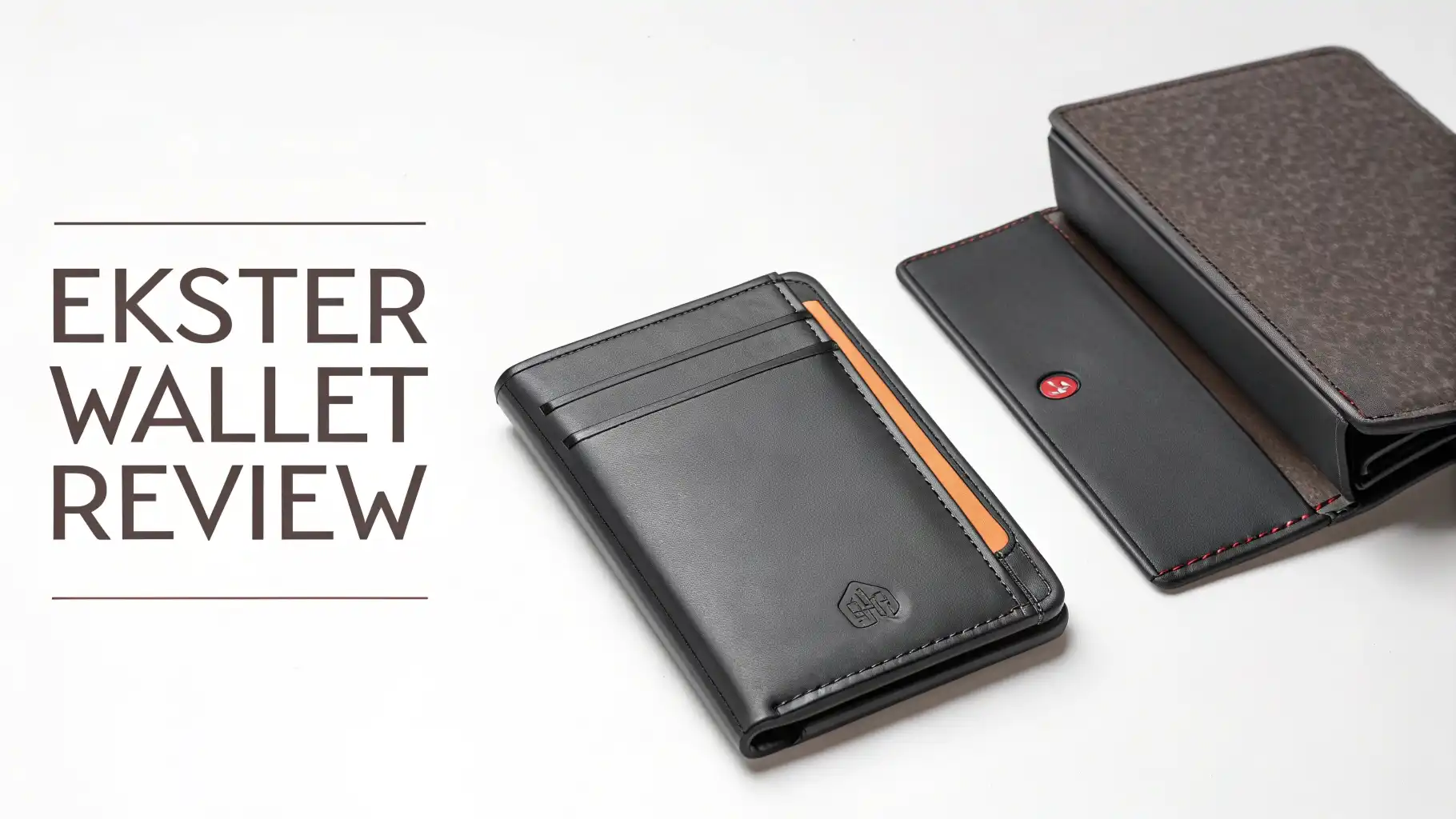
Ekster Wallet Review 2026: Is This Smart Wallet Worth Your Money?
You’ve probably seen Ekster wallets all over social media. They promise to solve every wallet problem you’ve ever had. But do they actually deliver?
I spent weeks testing an Ekster wallet to give you the real story. No fluff, no marketing hype. Just honest insights about what works and what doesn’t.
Smart wallets are trending in 2026. Everyone wants something sleek, functional, and tech-savvy. Ekster jumped on this trend years ago and built a loyal following. But with so many wallet options available now, does Ekster still stand out?
Key Takeaways:
- Quick card access is Ekster’s signature feature with their trigger mechanism that fans out cards instantly
- RFID protection comes standard in all models, keeping your credit cards safe from digital theft
- Premium materials include full-grain leather and aircraft-grade aluminum for the cardholder
- Price range sits between $59 to $169, making these wallets a mid-to-high investment compared to traditional options
- Tracking capability is available in select models with integrated solar-powered trackers that work worldwide
- Durability concerns have been reported by some users, particularly with the trigger mechanism after extended use

What Makes Ekster Wallets Different
Ekster wallets stand apart from traditional wallets in several ways. The brand focuses on smart functionality combined with minimalist design.
The trigger mechanism is their claim to fame. You press a lever, and your cards fan out like a deck. This feature eliminates the frustrating digging through card slots that happens with regular wallets.
Most Ekster wallets hold between 4 to 15 cards. They also include a strap or sleeve for cash. The design philosophy centers on carrying less and organizing better.
Solar-powered tracking sets certain models apart. The tracker charges itself and connects to your phone. You can see the wallet’s last known location on a map. This feature works through a crowd-finding network when the wallet is out of Bluetooth range.
Design and Build Quality
Ekster wallets look modern and sophisticated. The design language is clean with minimal branding. You won’t find giant logos screaming for attention.
The leather options include several colors. Black and brown are classics. But Ekster also offers blue, gray, and limited edition colors. The leather has a soft texture that develops a nice patina over time.
The aluminum cardholder sits at the core. This component holds your most-used cards. The metal is lightweight but strong. It protects cards from bending and breaking.
Stitching quality matters in wallets. Ekster uses reinforced stitching in high-stress areas. The thread matches or complements the leather color nicely. I haven’t experienced any loose threads or unraveling after months of use.
The wallet maintains a slim profile even when loaded with cards. Traditional bifold wallets create a bulge in your pocket. Ekster wallets stay relatively flat. This makes them comfortable for front pocket carry.
How the Card Access Mechanism Works
The trigger mechanism is Ekster’s signature innovation. Understanding how it works helps you decide if it suits your needs.
You load cards into the aluminum cardholder. The mechanism holds them securely with spring tension. When you press the trigger lever, the cards fan out in a cascading pattern.
Each card becomes visible and accessible without removing others first. You simply grab the card you want. The mechanism makes selection fast and intuitive.
The trigger requires minimal pressure. You don’t need to squeeze hard or use two hands. One thumb press does the job. This becomes second nature after a few days.
Loading cards takes some practice initially. You need to slide them in at the right angle. But once you get the technique down, it’s straightforward. The mechanism accommodates embossed and flat cards equally well.
Some users worry about accidental triggers. The trigger placement prevents this in most situations. It sits flush with the wallet body. Normal handling and pocket movement don’t activate it.
Top 3 Alternatives for Ekster Wallet


Storage Capacity and Organization
Storage capacity varies across Ekster models. Understanding what fits helps match the wallet to your lifestyle.
The aluminum cardholder typically holds 4 to 6 cards comfortably. You can squeeze in more, but the mechanism works best within this range. These should be your most frequently used cards.
The leather sleeve adds additional card slots. Depending on the model, you get 2 to 4 extra slots. These work for less-frequently accessed cards. The slots are tighter than the cardholder, providing secure storage.
Cash storage happens in the attached sleeve or strap. You fold bills in half or thirds depending on wallet size. The capacity accommodates 10 to 15 bills easily. More than that creates bulk and defeats the minimalist purpose.
Some models include a quick-access slot on the exterior. This works perfectly for a frequently used card like a transit pass or building access card. You can grab it without opening the wallet.
RFID Protection Features
RFID skimming is a real concern in 2026. Thieves use scanners to steal credit card information wirelessly. Ekster addresses this with built-in protection.
All Ekster wallets include RFID-blocking technology. The materials create a shield that prevents scanners from reading your cards. This protection works on both the aluminum cardholder and leather card slots.
The aluminum component provides natural RFID blocking. Metal naturally disrupts radio frequency signals. The leather sections include RFID-blocking material integrated into the layers.
Testing RFID protection is tricky for average users. But independent reviews confirm that Ekster’s protection works effectively. Your cards remain unreadable to scanners when stored in the wallet.
This protection doesn’t interfere with normal card use. When you remove a card to pay, it works perfectly. The blocking only functions when cards are stored inside the wallet.
Smart Tracking Technology
Select Ekster models include integrated tracking. This feature adds significant value for forgetful users or frequent travelers.
The tracker is solar-powered, which is brilliant. You never need to replace batteries or remember to charge it. Indoor lighting and sunlight keep it running indefinitely.
Connection happens through Bluetooth and GPS. When the wallet is within Bluetooth range (about 200 feet), you see its exact location. Beyond that range, the tracker uses crowd-finding technology.
Crowd-finding works through other users’ phones running the tracking app. When someone passes near your lost wallet, their phone anonymously reports the location to you. This network coverage is impressive in urban areas but limited in remote locations.
The tracking app is user-friendly. You can make the wallet ring to find it nearby. The sound is loud enough to hear under couch cushions or in a bag. You can also see the last known location on a map.
Durability and Long-Term Performance
Durability determines whether a wallet is worth the investment. Ekster wallets perform well overall but have some considerations.
The leather quality is genuinely good. It’s not the absolute top-tier leather you’d find in ultra-luxury brands, but it’s solid. The leather softens with use while maintaining structure. Color fastness is excellent with minimal fading over time.
The aluminum cardholder is highly durable. Aluminum resists scratching better than expected. Even after months in pockets with keys and phones, significant damage is rare. The anodized finish helps protect the surface.
The trigger mechanism raises some concerns. Several users report that the spring tension weakens after 12-18 months of heavy use. The cards still deploy but not as crisply as when new. This isn’t universal, but it happens frequently enough to mention.
Stitching holds up well in most cases. The reinforced stress points prevent the common problem of thread separation at corners. However, some users experience stitching issues within the first year, suggesting quality control inconsistencies.
Price and Value Analysis
Ekster wallets cost more than average wallets. The question is whether the features justify the price.
Basic models without tracking start around $59 to $89. Mid-range options with additional features run $99 to $129. Top models with tracking and premium leather reach $149 to $169.
Compared to traditional leather wallets of similar quality, Ekster sits 15-30% higher. You’re paying for the trigger mechanism, RFID protection, and design innovation. Whether that’s worthwhile depends on how much you value those features.
The tracking models offer better value in my opinion. A standalone Bluetooth tracker costs $25-30. Getting it integrated and solar-powered adds significant convenience. The premium over non-tracked models is justified.
Ekster runs frequent promotions. Sales of 20-40% off happen regularly around holidays. If you’re patient, you can get much better value. Sign up for their email list to catch these deals.
The warranty is two years, which is decent. This covers manufacturing defects but not normal wear or accidental damage. Customer service reportedly handles claims fairly, though experiences vary.
User Experience and Daily Practicality
Daily use reveals whether clever features actually improve your life. Here’s what using an Ekster wallet feels like.
The learning curve is surprisingly short. The trigger mechanism feels natural after two or three days. Card selection becomes faster than fumbling through traditional wallet slots. Your muscle memory adapts quickly.
Front pocket carry is comfortable. The slim profile doesn’t create the bulge that makes you sit unevenly. Many users switch from back pocket to front pocket carry after getting an Ekster wallet.
The wallet works well for quick transactions. You trigger the cards, select what you need, and pay. The process is faster than traditional wallets, especially with contactless payments. This efficiency adds up over time.
Cash handling is the main practical limitation. Folded bills work fine for occasional use. But if you regularly handle cash, deal with receipts, or need to organize different denominations, this wallet frustrates. The minimalist design sacrifices cash convenience.
The tracking feature provides genuine peace of mind. Knowing you can locate your wallet reduces anxiety, especially when traveling. The few times I misplaced mine, finding it took seconds instead of minutes of panicked searching.
Comparing Ekster to Competitors
Ekster isn’t the only smart wallet brand. Understanding how it compares helps inform your decision.
Ridge Wallet is Ekster’s main competitor. Ridge focuses more on minimalism with a purely metal design. Ridge wallets are slimmer but less flexible. They don’t have trigger mechanisms. Ridge also lacks integrated tracking in most models. Price points are similar.
Bellroy makes excellent traditional minimalist wallets. Their designs are more conventional without trigger mechanisms. Bellroy’s leather quality is arguably superior. But they don’t offer smart features like tracking. Bellroy wallets cost slightly less than comparable Ekster models.
The Fantom Wallet uses a fan mechanism similar to Ekster. Their prices run lower, typically $30-50. Build quality doesn’t match Ekster, and they lack premium materials. But for budget-conscious buyers, Fantom offers similar functionality.
Secrid Wallets from the Netherlands pioneered the card-sliding mechanism. Their design is more industrial and minimalist. Build quality is exceptional, arguably better than Ekster. However, Secrid doesn’t offer tracking or the same variety of styles. Prices are competitive.
Common Issues and Concerns
No product is perfect. Understanding common complaints helps set realistic expectations.
Trigger mechanism durability is the most frequent concern. Some users report the mechanism loosening or becoming less smooth after 12-18 months. This doesn’t make the wallet unusable but reduces the premium feel. Ekster’s customer service sometimes replaces units under warranty.
Card capacity disappoints users who underestimate how many cards they carry. The marketing shows sleek, minimally-loaded wallets. Reality involves more cards for most people. If you carry 10+ cards regularly, Ekster requires uncomfortable compromises.
Cash handling frustrates traditionalists. Americans who regularly use cash find the folded bill storage awkward. The wallet works better in primarily card-based economies or for people already minimizing cash use.
Some users experience stitching failures within the first year. This appears to be quality control inconsistency rather than design flaw. Most wallets hold up fine, but enough failures exist to warrant mention.
The leather quality receives mixed reviews. Some users love how it ages. Others feel it’s not premium enough for the price point. Expectations matter here. It’s good leather, just not exceptional.
Who Should Buy an Ekster Wallet
Ekster wallets suit specific users better than others. Here’s who benefits most.
Minimalists who embrace card-based payments are ideal customers. If you’re already trying to slim down what you carry, Ekster facilitates that lifestyle. The design encourages intentional minimalism.
Tech enthusiasts appreciate the smart features. The trigger mechanism and solar tracking appeal to people who love innovative solutions to everyday problems. If you enjoy showing friends your clever wallet, Ekster delivers.
Frequent travelers benefit from tracking features and RFID protection. The peace of mind knowing you can locate your wallet in unfamiliar places is valuable. The slim design also saves precious pocket space when traveling light.
Gift buyers should consider Ekster. The wallets come in attractive packaging and feel premium. They make excellent gifts for graduation, Father’s Day, or birthdays. The wow factor is high when someone first uses the trigger mechanism.
Front pocket carriers will love the slim profile. If you’ve dealt with back pain or discomfort from traditional wallet bulk, Ekster offers genuine relief. The ergonomics work better for front pocket carry.
People who lose things obviously benefit from tracking. If you regularly misplace your wallet, the tracking feature pays for itself in reduced stress. The solar power means you don’t need to maintain the tracker.
Is Ekster Worth It? Final Verdict
After extensive testing, here’s my honest conclusion about Ekster wallets.
The trigger mechanism works as advertised. It genuinely makes card access faster and more convenient. This isn’t gimmicky. It’s a practical improvement over traditional wallet designs. The satisfaction of triggering your cards never quite wears off.
Quality is good but not exceptional at this price point. The materials are solid, and craftsmanship is respectable. But you’re paying somewhat of a premium for the brand and innovation rather than pure material quality. Competing wallets offer similar or better leather at lower prices.
The tracking feature is genuinely valuable if you spring for those models. Solar power eliminates the main annoyance of Bluetooth trackers. The crowd-finding network works well in populated areas. This feature alone justifies much of the price premium.
Durability concerns are real but not universal. Many users experience no issues. Some face trigger mechanism degradation or stitching failures. The two-year warranty provides some protection, but longevity beyond that is uncertain for heavy users.
The lifestyle fit matters enormously. For minimalist, card-focused users, Ekster is excellent. For traditional wallet users who carry significant cash and many cards, it’s frustrating. Your daily habits determine whether this wallet enhances or complicates your life.
Value depends on catching sales. At full retail price, Ekster is expensive for what you get. At 30-40% off during promotions, the value proposition improves significantly. Patient buyers can get much better deals.
Overall, I’d rate Ekster wallets 7.5 out of 10. They deliver on core promises with some caveats. The innovation is real, the experience is generally positive, but durability questions and price concerns prevent a higher rating.
If the features align with your needs and you can buy during a sale, Ekster is worth trying. Just set realistic expectations about capacity and longevity.
FAQs
How long do Ekster wallets typically last?
Most Ekster wallets last between two to four years with regular use. The leather exterior holds up well and develops attractive patina over time. The aluminum cardholder remains functional throughout the wallet’s life.
The main durability concern involves the trigger mechanism. Some users report reduced smoothness after 12 to 18 months of heavy daily use. This doesn’t make the wallet unusable but affects the premium feel.
Can you fit coins in an Ekster wallet?
Ekster wallets do not include dedicated coin compartments. The minimalist design philosophy prioritizes slim profile over coin storage.
Some users creatively use the cash strap to hold a few folded bills with coins inside. This works for emergency change but isn’t practical for regular coin use.
If you frequently handle coins, consider carrying a separate small coin pouch. Alternatively, embrace digital payments to eliminate the need for coins entirely.
Does the tracking work internationally?
Yes, Ekster’s solar-powered tracker works worldwide. The Bluetooth connection functions anywhere. The GPS crowd-finding network operates globally wherever other users have the app installed.
Urban areas in developed countries have excellent coverage. Major cities in Europe, North America, and Asia provide reliable tracking through dense user networks.
Is Ekster leather real or synthetic?
Ekster uses genuine leather in their premium wallet lines. Specifically, they use full-grain and top-grain leather depending on the model. This is real animal leather, not synthetic materials.
The leather quality is solid mid-range. It’s not exotic leather or the absolute highest grade available. But it’s authentic leather that ages naturally and develops patina.
Can you replace the tracker battery?
No battery replacement is necessary. Ekster’s tracker uses solar power technology that recharges continuously from any light source. Indoor lighting and sunlight both charge the tracker.
The solar panel provides essentially unlimited battery life. Ekster claims the tracker runs for three months on a full charge even without additional light exposure. In normal use with regular light exposure, the battery never depletes.
Does Ekster wallet fit US dollars comfortably?
US dollars fit in Ekster wallets but require folding. The cash strap or sleeve accommodates bills folded in half or thirds depending on wallet model.
Ten to fifteen bills fold comfortably without creating excessive bulk. More than that defeats the slim profile purpose. The wallet works for light to moderate cash carrying.


